
The Ancient Sleep Reset: Why the Best Rest Is Behind Us, Not in a Pill or App
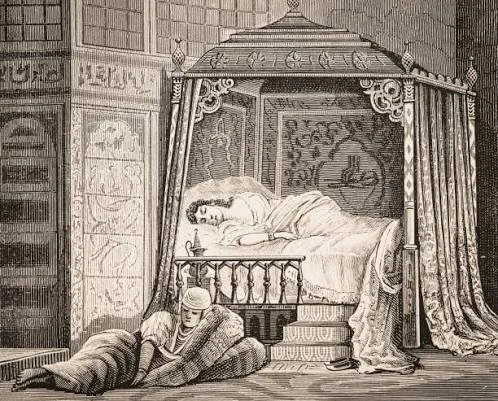
How four of the world’s most-listened-to sleep experts—including the historian who uncovered humanity’s lost sleep pattern—prove that better sleep comes from looking backward, not forward.
The Four Voices Leading the Sleep Revolution
Over the last five years, four experts have dominated the podcast airwaves, reshaping how millions think about rest. Each brings a distinct lens, but together they form a chorus that points to one radical conclusion: we are sleeping wrong because we have forgotten how we used to sleep.
Dr. Matthew Walker, Professor of Neuroscience and Psychology at UC Berkeley and author of the international bestseller Why We Sleep, has appeared on the Huberman Lab Podcast, The Joe Rogan Experience, The Peter Attia Drive, and hosts his own Matt Walker Podcast. His research examines the impact of sleep on human health and disease, and he frequently explains the evolutionary functions of sleep stages—why Mother Nature kept REM, deep NREM, and light sleep when she could have excised the unnecessary ones long ago.
Dr. Andrew Huberman, Stanford neurobiologist and host of the Huberman Lab Podcast, has devoted multiple episodes to the science of sleep and wakefulness, dissecting how light, temperature, caffeine, and circadian rhythms govern our rest. His work reaches millions monthly, making him one of the most influential science communicators in sleep medicine today.
Dr. Jade Wu, a board-certified behavioral sleep medicine psychologist at Duke University School of Medicine and author of Hello Sleep: The Science and Art of Overcoming Insomnia Without Medications, has been a frequent guest on NPR, ABC, and podcasts like Medicine Redefined. Her mission is to spread the gift of sleep through evidence-based behavioral change rather than pharmaceuticals.
Dr. Roger Ekirch, University Distinguished Professor of History at Virginia Tech, is the historian who made the exhilarating discovery that, for most of human history, people slept in two distinct phases—"first sleep" and "second sleep"—separated by a period of quiet wakefulness. His 2005 book At Day’s Close: Night in Times Past and his 2016 article in the journal Sleep revolutionized our understanding of pre-industrial rest.
The Evolutionist in the Room
Among these four, Dr. Roger Ekirch stands as the historian who brings an evolutionary perspective to human sleep. While Walker explains the neurobiology of why evolution kept sleep, Ekirch uncovered the historical evidence of how humans actually slept for millennia before the Industrial Revolution. His archival research revealed that biphasic sleep—two sleep segments punctuated by a waking interval—was not an aberration but the dominant pattern for thousands of years.
Ekirch’s work forces us to confront a humbling truth: our modern, consolidated eight-hour sleep block is a recent invention, barely two centuries old. Before gaslight and electricity, humans followed a rhythm encoded by nature, not by factory whistles.
The Thesis: Look Back to Sleep Forward
The central argument of this article is simple and counter-cultural in a world obsessed with sleep trackers, smart mattresses, and prescription sleep aids: better sleep is found by looking back, not by reaching for forward-looking technology or drugs.
We have spent the last century trying to hack sleep with gadgets and pharmaceuticals. Yet insomnia rates continue to climb. The solution is not in the next app update or pill formulation. It is in the restoration of pre-industrial sleep wisdom, supported by modern neuroscience and behavioral psychology.
The Hard Truth About Sleeping Pills and Your Brain
If you are using prescription sleep medications regularly, the long-term data should alarm you.
A nationally representative study of older adults in the United States followed participants for eight years. After controlling for demographics, chronic health conditions, and sleep difficulties, researchers found that routine sleep medication use was associated with a 30% greater risk of incident dementia compared to non-users.
The mechanism is not merely correlation. A meta-analysis found that benzodiazepine use presents a 78% higher risk for Alzheimer’s disease compared to non-use.
Harvard Health summarizes the concern bluntly: in two separate large population studies, both benzodiazepines (which include many sleeping pills) and anticholinergics were associated with an increased risk of dementia in people who used them for longer than a few months. The effect increased with dose and duration.
A 2023 study from UCSF found that white older adults who frequently took sleeping pills had a 79% higher chance of developing dementia compared to those who rarely or never took them.
The science is clear: sleeping pills may knock you unconscious, but they do not produce natural sleep. They alter sleep architecture, suppress deep NREM and REM cycles, and over time may accelerate the very cognitive decline that restorative sleep is meant to prevent.
Blue Light: The Invisible Brain Assault
If pills are the internal threat, blue light is the external one.
Harvard researchers found that 6.5 hours of blue light exposure suppressed melatonin for about twice as long as green light and shifted circadian rhythms by twice as much—3 hours versus 1.5 hours.
A systematic review of blue light exposure found that while it can enhance alertness and cognitive performance during the day, one-fifth of studies found sleep quality decreased, one-third found sleep duration decreased, and half found sleep efficacy decreased with nighttime exposure.
The long-term neurological cost is only beginning to be understood. Chronic circadian disruption from artificial light at night is now linked to increased stress, anxiety, and dementia risk through the same pathways that sleeping pills exploit: poor sleep architecture prevents the brain’s glymphatic system from clearing neurotoxic waste like β-amyloid.
We are, in effect, living in a grand sleep experiment where we drug ourselves to unconsciousness at night and blast our retinas with melanopic light all evening—then wonder why we wake up foggy, anxious, and prematurely aging.
What Jade Wu Teaches Us: Sleep Is a Relationship, Not a Transaction
Dr. Jade Wu does not approach sleep as a mechanical problem to be fixed with a gadget or a pill. She approaches it as a relationship to be healed.
In her book Hello Sleep and her podcast appearances, Wu emphasizes that insomnia is not the same as sleep deprivation. Sleep deprivation is a lack of opportunity; insomnia is a broken trust between you and your bed. The more you try to force sleep, the more your brain associates the bed with wakefulness and performance anxiety.
Wu’s behavioral approach aligns perfectly with the historical record. Pre-industrial sleepers did not lie in bed counting sheep or staring at sleep scores. They slept when tired, woke naturally, and used the night as a time of reflection, prayer, or quiet activity. The bed was a place of rest, not a performance stage.
Her core message: stop trying to sleep and start allowing sleep. This is the psychological bridge between Ekirch’s historical discovery and Walker’s neurobiology.
The Lost Rhythm: Roger Ekirch and Biphasic Sleep
Before 1900, waking in the middle of the night was normal. It was called "the watch"—a period between "first sleep" and "second sleep" when people prayed, read, talked, or simply rested in peaceful wakefulness.
Ekirch’s research, published in Sleep and Past & Present, documents this pattern across centuries of archival records. He argues that modern "sleep maintenance insomnia"—waking at 2 or 3 a.m. and panicking—may actually be a persistent echo of this ancient, dominant pattern.
The consolidated sleep we worship today is, as Ekirch notes, "very youthful, very young. It’s, in the Western world, no older than two centuries."
The Industrial Revolution did not improve our sleep. It compressed it, standardized it, and pathologized the natural wakefulness that had served humanity for millennia.
The Solution: The Vigil Sleep Restoration Program
Drawing from the collective wisdom of Walker, Huberman, Wu, and Ekirch, we can construct a program that requires no prescription, no wearable, and no subscription. It requires only the recovery of two sacred time blocks: the first 30 minutes of your morning and the last 60 minutes of your evening.
The First 30 Minutes: Solar Anchoring
Morning sunlight is the most powerful circadian signal available to the human brain. It is free, non-negotiable, and evolutionarily ancient.
A cross-sectional study of 1,762 adults found that every 30-minute increment of morning sun exposure (before 10 a.m.) was associated with a 23-minute reduction in the midpoint of sleep and improved overall sleep quality scores.
Experts recommend getting outside within the first 30 to 60 minutes of waking. This is when your body is most sensitive to light, which makes the signal to "wake up" even stronger.
The Morning Protocol:
Within 30 minutes of waking, get outside for 5–15 minutes of natural light exposure.
Do not wear sunglasses if safe; clear lenses are fine, but avoid tinted or transition lenses.
If cloudy, stay out longer—outdoor light is still brighter than indoor lighting.
No phone scrolling before this light exposure. The first light your brain receives should be solar, not LED.
This single habit anchors your cortisol-melatonin rhythm, setting the countdown timer for sleep that begins 12–14 hours later.
The Last 60 Minutes: The Digital Sunset
If the morning is about activation, the evening is about deactivation. The brain does not have an on/off switch. It has a dimmer.
Sleep medicine consensus agrees: a 30–60 minute wind-down period before bed is one of the most effective and overlooked ways to improve sleep quality.
The Sleep Foundation recommends a consistent bedtime routine in the 30 to 60 minutes before bed, including turning off screens, dimming lights, and engaging in calming activities.
The Evening Protocol:
60 minutes before bed: Turn off all screens—phones, tablets, computers, TVs. If necessary, enable night mode and lower brightness, but elimination is ideal.
45 minutes before bed: Dim household lights. Use warm, amber bulbs or candles. Bright lights tell your brain it is still daytime.
30 minutes before bed: Engage in a non-stimulating activity: reading paper books, gentle stretching, journaling, prayer, or meditation.
15 minutes before bed: Perform a "worry download"—write down any lingering thoughts or tomorrow’s tasks so your brain does not ruminate in bed.
This protocol respects what Ekirch discovered: the transition into sleep was once a gradual, social, and spiritual event—not a sudden collapse after a final Instagram scroll.
The Optional Middle: Reclaiming the Watch
For those who wake in the night, Ekirch’s research offers liberation. If you wake at 2 or 3 a.m., do not panic. Do not reach for a pill or a phone. Instead, accept it as a potential echo of ancestral biphasic sleep.
Get up, keep lights dim, and engage in a quiet activity for 20–40 minutes: reading poetry, praying, stretching, or simply sitting in darkness. When sleepiness returns, go back to bed. This is not insomnia. It is history.
The Evidence-Based Summary
Table
Modern MistakeAncient SolutionScientific BackingSleeping pills for chronic insomniaBehavioral sleep restoration30–79% increased dementia risk with routine pill useBlue light exposure until bedtimeDigital sunset / amber evenings2x melatonin suppression; 3-hour circadian shiftLying in bed awake, forcing sleepGetting up during "the watch"Ekirch’s biphasic sleep researchIrregular wake timesMorning solar anchoring23-minute sleep midpoint improvement per 30 min sunTracking sleep obsessivelyRebuilding trust with sleep (Wu)CBT-I is the gold standard for insomnia
Conclusion: Rest Is Older Than Our Forgetting
We do not need more sleep technology. We need less. We do not need stronger sleeping pills. We need weaker evening lights. We do not need to invent a new sleep pattern. We need to remember an old one.
The four experts who have shaped the sleep conversation in the podcast era—Walker, Huberman, Wu, and Ekirch—converge on a single message despite their different disciplines. The neuroscientist, the neurobiologist, the behavioral psychologist, and the historian all point backward. The body you inhabit evolved over millions of years. It slept in darkness, woke with sunlight, and accepted the night as a place of peace rather than productivity.
Better sleep is not in your pharmacy. It is in your history.
References
Walker, M. (2017). Why We Sleep: Unlocking the Power of Sleep and Dreams. Scribner.
Walker, M. (2021). "The Science & Practice of Perfecting Your Sleep." Huberman Lab Podcast, Episode 31. YouTube.
Huberman, A. (2021). "Master Your Sleep & Be More Alert When Awake." Huberman Lab Podcast, Episode 2. hubermanlab.com.
Wu, J. (2023). Hello Sleep: The Science and Art of Overcoming Insomnia Without Medications. St. Martin’s Press.
Wu, J. (2022). "The Link Between Insomnia and Anxiety, Sleep Psychology, Sleep Hygiene." Medicine Redefined Podcast, Episode 47. medicineredefined.com.
Ekirch, A.R. (2005). At Day’s Close: Night in Times Past. W.W. Norton.
Ekirch, A.R. (2016). "Segmented Sleep in Preindustrial Societies." Sleep, 39(3), 715–716.
Ekirch, A.R. (2015). "The Modernization of Western Slumber: Or, Does Insomnia Have a History?" Past & Present, 227(1), 149–192.
Brewster, G.S. et al. (2023). "Sleep Medication Use and Incident Dementia in a Nationally Representative Sample of Older Adults in the US." PMC, 7925354.
Harvard Health Publishing. (2021). "Two Types of Drugs You May Want to Avoid for the Sake of Your Brain." health.harvard.edu.
Leng, Y. et al. (2023). "Association Between Sleep Medication Use and Dementia Risk." University of California, San Francisco.
Harvard Health Publishing. (2024). "Blue Light Has a Dark Side." health.harvard.edu.
Nagai, N. et al. (2024). "Effects of Blue Light During and After Exposure on Auditory Working Memory." PMC, 12096479.
Nagai, N. et al. (2022). "The Influence of Blue Light on Sleep, Performance and Wellbeing." PMC, 9424753.
de Oliveira, G.L. et al. (2025). "The Role of Sunlight in Sleep Regulation: Analysis of Morning, Evening and Late Exposure." PMC, 12502225.
Banner Health. (2025). "Sun Gating and Morning Light for Better Sleep." bannerhealth.com.
GW Cancer Prevention and Wellness Center. (2026). "How to Build a Sleep Routine That Actually Works." cancercenter.gwu.edu.
Sleep Foundation. (2025). "How to Build a Better Bedtime Routine for Adults." sleepfoundation.org.
Rimler, R. (2017). "Sleeping in Two Shifts: A History of Biphasic Sleep." Sleep Review Conversations Podcast with A. Roger Ekirch, PhD, and Siobhan Banks, PhD. sleepreviewmag.com.
Lieberman, D.E. (2021). Exercised: Why Something We Never Evolved to Do Is Healthy and Rewarding. Pantheon. (Evolutionary context on sleep duration in hunter-gatherer populations.)
This article is for informational purposes and does not constitute medical advice. If you are experiencing chronic insomnia, consult a board-certified sleep specialist.
