
The Siesta Secret: Why Biphasic Sleep Is Returning
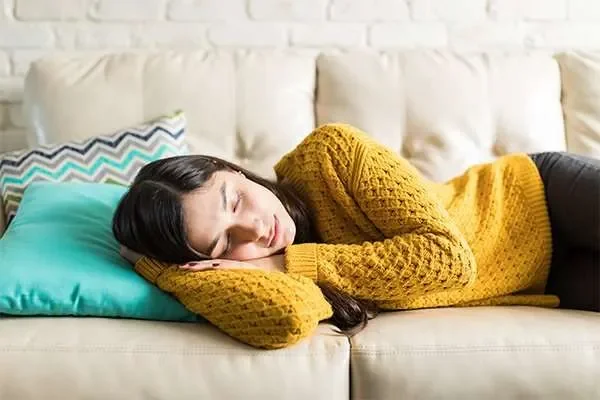
Why Your Brain Is Begging for It
The 8-hour sleep block is a modern invention. The afternoon nap is ancient biology. Here is why the world's healthiest people never stopped doing it — and why Silicon Valley is finally catching up.
The 2 PM Crash Is Not a Bug. It's a Feature.
If you have ever felt your eyelids grow heavy after lunch, stared blankly at a spreadsheet, or secretly envied the Mediterranean cultures that shut down for a midday rest, you have experienced something your body has been trying to tell you for millennia:
You are not designed to sleep once per day.
That post-lunch slump — the one you fight with coffee, cold water, or a shameful scroll through your phone — is not a sign of laziness, poor diet, or weak willpower. It is a circadian signal, hardwired into your biology, that predates the Industrial Revolution, the lightbulb, and the 9-to-5 workday.
For most of human history, we did not fight this signal. We obeyed it.
What Biphasic Sleep Actually Is — And Why We Forgot It
Biphasic sleep simply means dividing your daily sleep into two segments rather than one continuous block. The most common form is a longer period of nighttime sleep (roughly 6–7 hours) paired with a shorter daytime nap (20–90 minutes).
This was not a fringe practice. It was the norm.
Historical records from Homer’s Odyssey through medieval diaries, medical texts, and court documents reveal that for centuries, people across cultures referred to their rest as "first sleep" and "second sleep" — with a natural waking period in between.
Dr. A. Roger Ekirch, University Distinguished Professor of History at Virginia Tech, spent decades uncovering this forgotten pattern. His research revealed that before affordable artificial lighting, humans slept in two distinct phases, often waking around midnight for an hour or two of quiet reflection, prayer, or conversation before returning to bed until dawn.
Then came the lightbulb. The factory whistle. The 40-hour workweek. And almost overnight, humanity compressed its ancient biphasic rhythm into a single, exhausted block of nighttime unconsciousness.
We did not evolve to sleep this way. We were trained to.
The Science of the Afternoon Dip: Your Brain on Biology
Here is what modern sleep science has confirmed: the post-lunch drowsiness you feel is not about digestion. It is about circadian biology.
Your body runs on two interacting systems that govern sleep and wakefulness: the homeostatic sleep drive (Process S), which builds pressure for sleep the longer you are awake, and the circadian alerting signal (Process C), which pulses on a roughly 24-hour rhythm.
In the early afternoon — typically between 1:00 and 4:00 p.m. — your circadian alerting signal dips. This is not a design flaw. It is a biological window for restorative rest that has been observed across cultures, climates, and centuries.
A 2025 theoretical review published in Sleep Medicine Reviews proposed biphasic sleep as a paradigm for personalized sleep medicine, noting that the afternoon circadian dip represents an innate, evolutionarily conserved opportunity for recovery that monophasic sleepers are actively suppressing.
When you ignore this window and reach for another espresso instead, you are not "powering through." You are overriding a biological command with a chemical Band-Aid.
What the Nap Actually Does to Your Brain
The cognitive benefits of strategic napping are not anecdotal. They are measurable, reproducible, and significant.
A systematic review and meta-analysis of daytime napping found that naps ranging from 20 to 90 minutes yield improvements in reaction time, working memory, and cognitive flexibility.
Even brief naps have profound effects:
Memory consolidation: A nap allows the hippocampus — your brain's memory center — to offload information to the neocortex for long-term storage. Post-nap hippocampal activation is positively correlated with sleep spindle count, the brainwaves that facilitate memory transfer.
Emotional regulation: Napping increases serotonin and dopamine while lowering cortisol, improving mood stability and reducing impulsivity.
Executive function: Medical interns who took short naps of 15 or 45 minutes during night shifts showed improved attention and cognitive control that persisted into the late afternoon — benefits linked to elevated vagally mediated heart rate variability.
Neuroprotection: Strategic napping supports the glymphatic system — the brain's waste-clearance network — which is active during sleep and critical for removing neurotoxic proteins like β-amyloid.
The optimal nap duration depends on your goal:
| Nap Length | Best For | Trade-off |
|---|---|---|
| 10–20 minutes | Immediate alertness, no grogginess | Limited memory consolidation |
| 30–60 minutes | Memory, creativity, emotional resilience | Possible brief sleep inertia |
| 60–90 minutes | Full sleep cycle, deep memory encoding | Higher risk of nighttime sleep disruption |
Johns Hopkins sleep experts recommend naps between 20 and 40 minutes for most adults, taken between 1:00 and 4:00 p.m. to avoid interfering with nighttime sleep.
The Blue Zone Proof: Where People Nap Their Way to 100
If you want to see biphasic sleep in its natural habitat, look to the places where people live the longest.
Ikaria, Greece — one of the world's five official Blue Zones — is an island where one in three residents reaches their 90s, dementia is rare, and heart disease occurs at one-fifth the American rate.
Ikarians do not achieve this through biohacking. They achieve it through tradition. Their days follow a rhythm that would be unrecognizable to a productivity-obsessed Westerner: a late lunch, followed by a mid-afternoon nap, then a slow evening of socializing, wine, and rest.
Research on Blue Zone populations confirms that regular nappers have up to 35% lower chances of dying from heart disease compared to non-nappers.
The siesta is not a Mediterranean luxury. It is a longevity technology that predates every supplement, wearable, and wellness trend on the market.
Why Biphasic Sleep Is Returning Now
The resurgence of biphasic sleep is not happening in a vacuum. Three converging forces are driving it:
1. The Failure of the 8-Hour Myth
Millions of people are doing everything "right" — sleeping 7–8 hours in a single block, avoiding caffeine after noon, buying expensive mattresses — and still waking exhausted. The reason is simple: they are fighting their biology. As sleep researcher Matthew Walker has noted, hunter-gatherer tribes like the Hadza and San people in Africa sleep in a biphasic pattern, taking a 30–60 minute nap after a longer nighttime sleep — and they do not suffer from the insomnia epidemics plaguing industrialized nations.
2. The Corporate Nap Revolution
The world's most innovative companies are no longer treating napping as laziness. They are treating it as competitive advantage.
Google, Nike, Ben & Jerry's, Uber, Zappos, Cisco, and Procter & Gamble have all installed nap pods, sleep rooms, or designated rest areas for employees.
Arianna Huffington, after collapsing from exhaustion in 2007, made nap rooms a centerpiece of The Huffington Post's culture — and reported increased productivity, creativity, and job satisfaction as a result.
3. Gen Z and the Rejection of Hustle Culture
Perhaps most tellingly, younger generations are embracing naps as a form of self-care rebellion. A 2021 survey found that 80% of Gen Z workers admit to napping at work — compared to 60% of Gen Xers.
They are not lazy. They are listening to their bodies in a way their parents were taught not to.
The Siesta Protocol: How to Reclaim Biphasic Sleep
You do not need to move to Ikaria or install a nap pod in your office. Reclaiming biphasic sleep requires only three adjustments:
Step 1: Protect the Night
Your nighttime sleep remains the foundation. Aim for 6.5–7.5 hours of consolidated nighttime sleep. This is enough to complete 4–5 full sleep cycles, including the deep NREM and REM stages critical for physical recovery and emotional processing.
Step 2: Honor the Dip
Schedule your nap for the early afternoon window (1:00–3:00 p.m.), when your circadian alerting signal naturally bottoms out. This timing maximizes restorative benefit while minimizing interference with nighttime sleep.
Step 3: Time the Nap to the Outcome
For instant alertness: 10–20 minutes. Set an alarm. Do not let yourself drift into deep sleep.
For memory and creativity: 30–60 minutes. Accept 5–10 minutes of post-nap grogginess as the price for deeper restoration.
For full-cycle recovery: 90 minutes. Only if you have the time and will not compromise nighttime sleep.
Step 4: Create the Environment
Your nap space should mimic nighttime sleep conditions as closely as possible: dark, cool (65–68°F / 18–20°C), and quiet. An eye mask and white noise can transform an office chair or car seat into a viable nap station.
Step 5: Stop Apologizing
The single biggest barrier to biphasic sleep in modern society is not logistics. It is guilt. We have been conditioned to view rest as the opposite of productivity. The science says the opposite: strategic rest is the engine of sustained performance.
The Counterarguments — And Why They Fall Short
"But I don't have time to nap."
You do not have time not to. A 20-minute nap has been shown to improve cognitive performance for 1–3 hours afterward — meaning you recover the "lost" time through increased efficiency.
"Won't napping ruin my nighttime sleep?"
Only if done incorrectly. Late-evening naps (after 4 p.m.) and long naps (>90 minutes) can fragment nighttime sleep. Early afternoon naps of moderate duration do not.
"Isn't this just making excuses for laziness?"
That framing is itself a product of industrial-era conditioning. The world's longest-lived, most cognitively sharp populations — from Ikaria to Okinawa — have never abandoned the afternoon rest. The laziness narrative is a cultural artifact, not a biological truth.
Conclusion: The Future of Sleep Is Behind Us
We are living through a fascinating reversal. For two centuries, modernity tried to convince us that sleep was an inconvenient interruption — a single block of unconsciousness to be minimized, medicated, and optimized with gadgets.
Now, the evidence is pointing backward. To the siesta. To the "first sleep" and "second sleep." To the afternoon nap that Ikarians, Spaniards, and hunter-gatherers never abandoned.
Biphasic sleep is not a trend. It is a return. A return to a rhythm encoded in your DNA, validated by modern neuroscience, and practiced by the healthiest people on Earth.
Your 2 p.m. eyelid heaviness is not a weakness. It is a signal. And for the first time in generations, the world is starting to listen.
References
Ekirch, A.R. (2005). At Day's Close: Night in Times Past. W.W. Norton.
Ekirch, A.R. (2016). "Segmented Sleep in Preindustrial Societies." Sleep, 39(3), 715–716.
Walker, M. (2017). Why We Sleep: Unlocking the Power of Sleep and Dreams. Scribner.
Buysse, D. (2024). "Is sleeping through the night the 'right' way to sleep?" National Geographic, January 4, 2024.
Ribeiros, J.S. et al. (2025). "Biphasic sleep and human health: A theoretical paradigm for personalized sleep." Sleep Medicine Reviews.
Anand, A. et al. (2024). "Wake up and get some sleep: Reviewing workplace napping and charting future directions." Journal of Sleep Research.
Shadab, S. et al. (2025). "Optimizing cognitive health and emotional well-being through daytime napping: current insights and future directions." PMC, 12767991.
Lovato, N. & Lack, L. (2010). "The effects of napping on cognitive functioning." Progress in Brain Research, 185, 155–166.
Gamaldo, C. (2024). "Can a Nap Boost Brain Health?" Johns Hopkins Medicine, June 20, 2024.
Buettner, D. (2015). The Blue Zones Solution. National Geographic.
Blue Zones LLC. (2025). "Ikaria, Greece." bluezones.com.
Sleep Foundation. (2026). "Biphasic Sleep: What It Is and How It Works." sleepfoundation.org.
Healthline. (2019). "Biphasic Sleep: Schedule, Cycle, and Long-Term Effects." healthline.com.
Sleepopolis. (2023). "TikTok Explains How Gen Z, Gen X, Millennials, and Different Generations Nap Best." sleepopolis.com.
BioLife Health Center. (2024). "The Power of Midday Rest: Siestas for Executives." biolifehealthcenter.com.
This article is for informational purposes and does not constitute medical advice. If you experience chronic sleep difficulties, consult a board-certified sleep specialist.
