
100% Pure Linen Bed Slippers With Copper
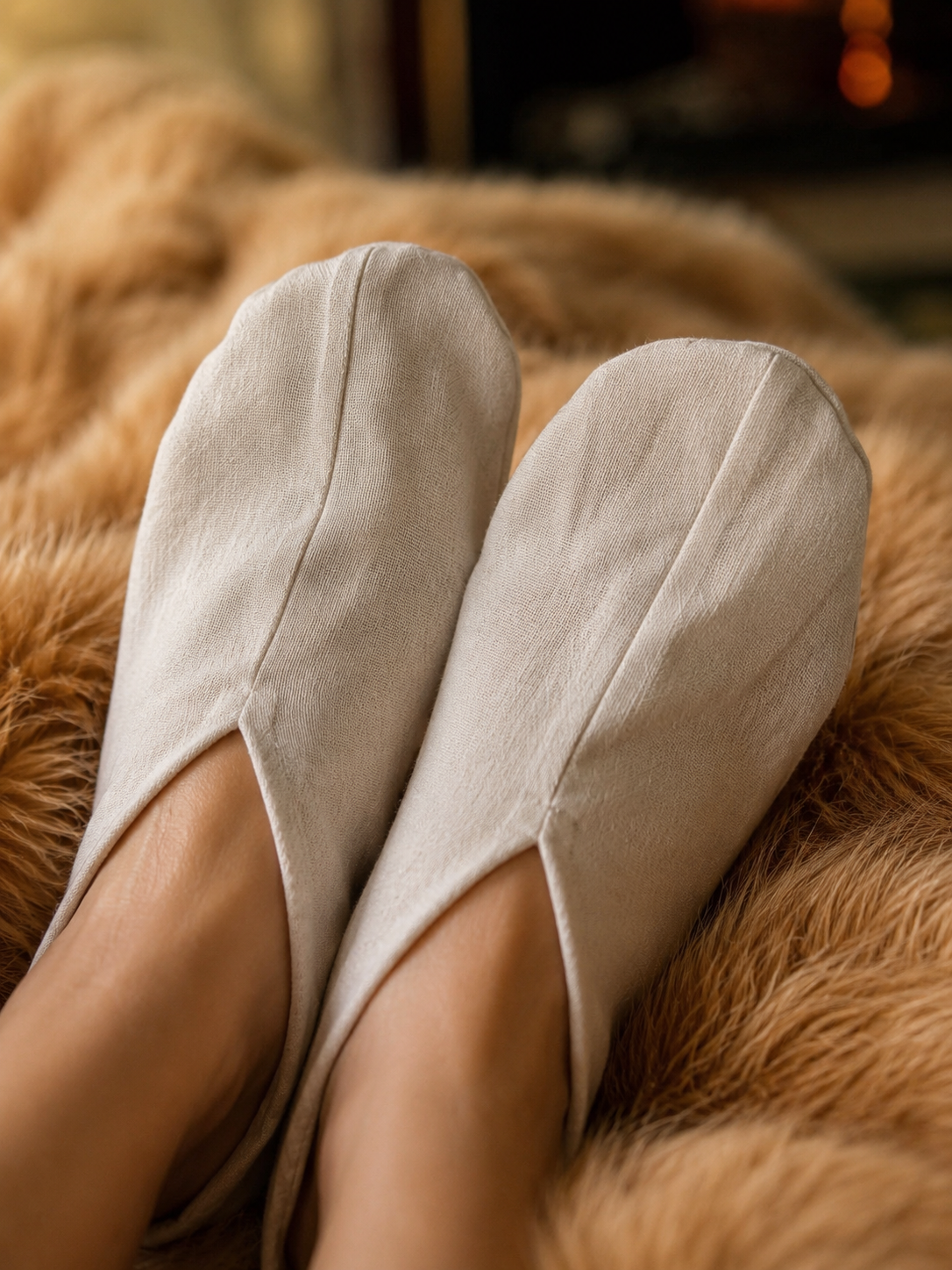
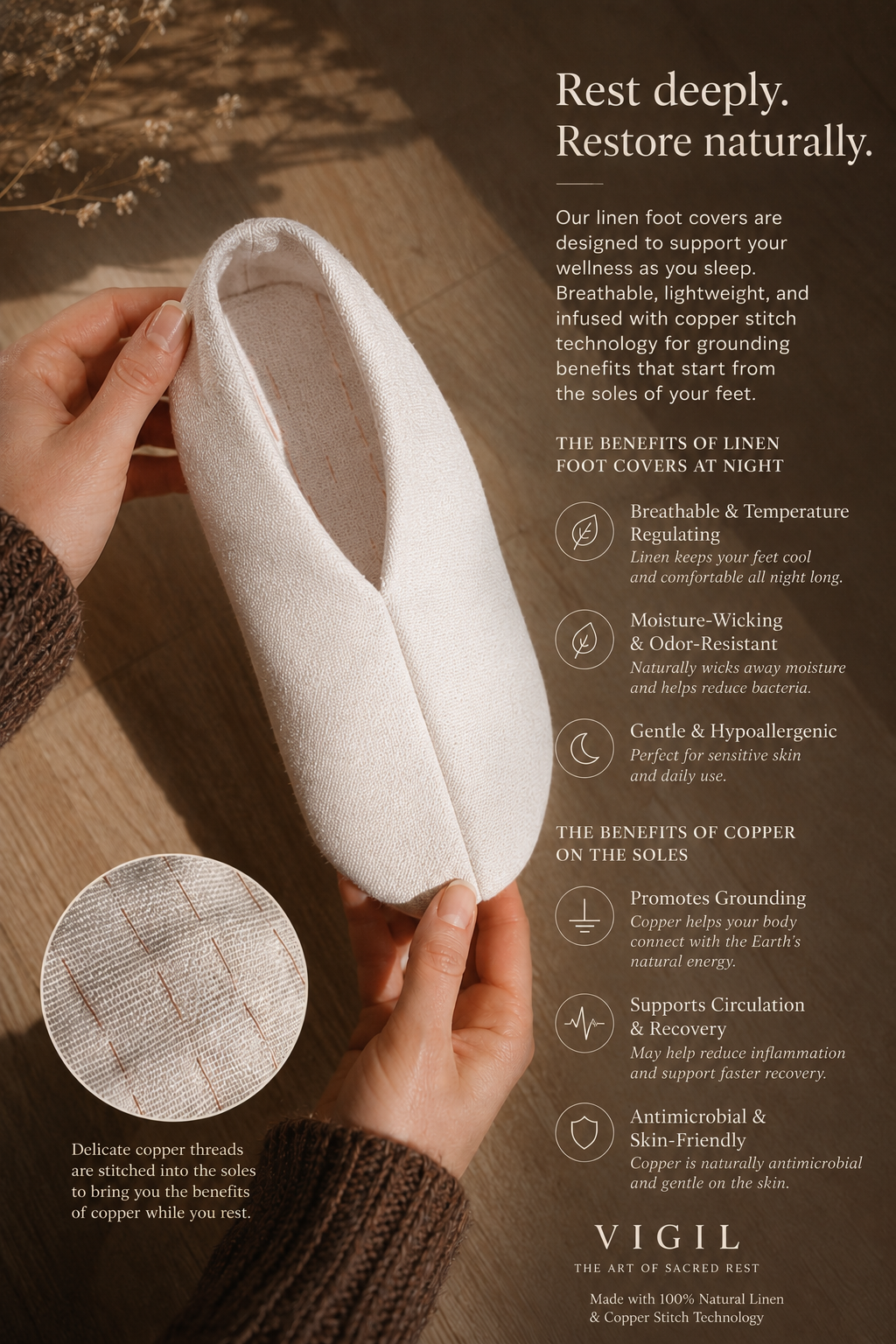
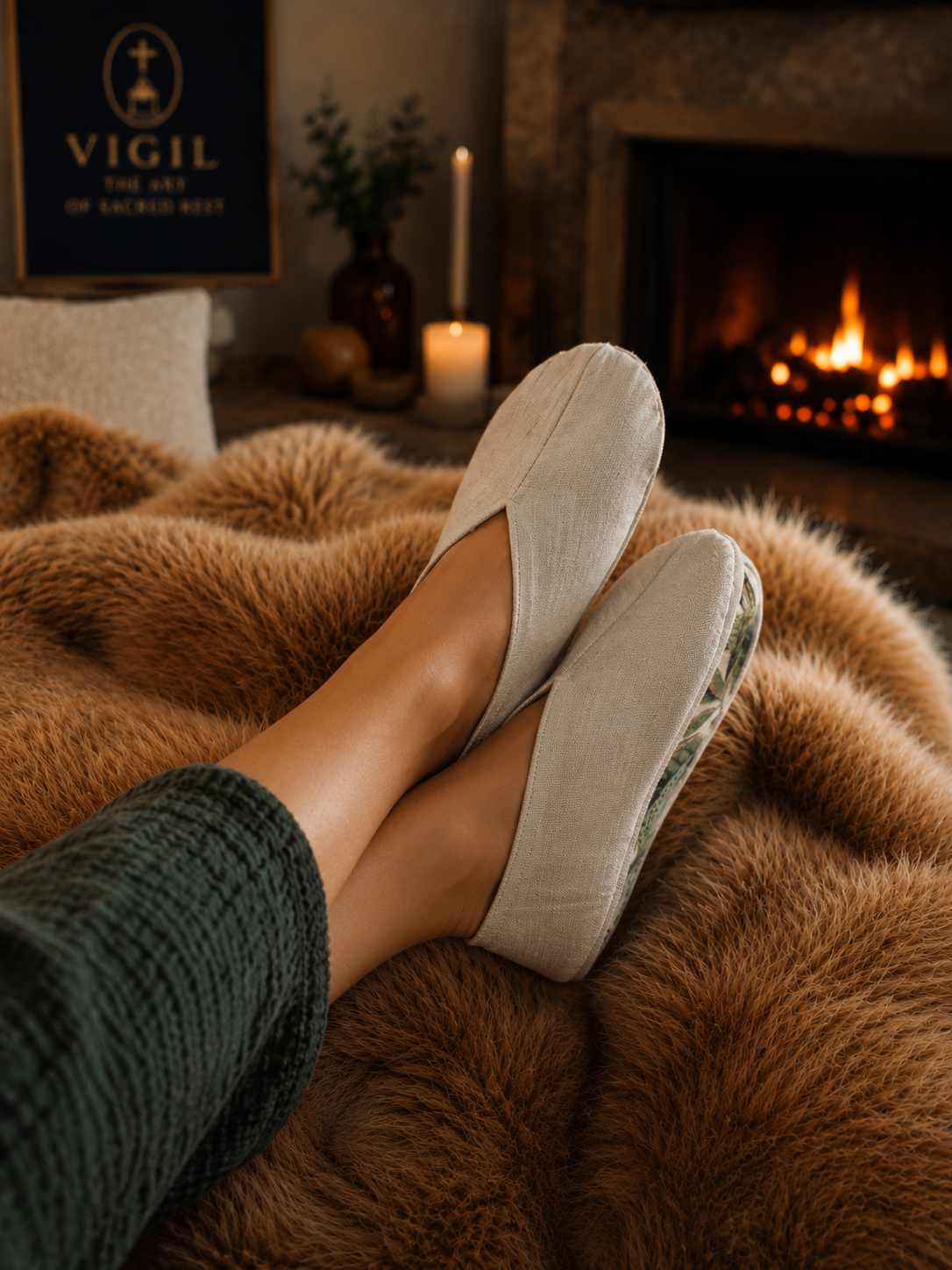
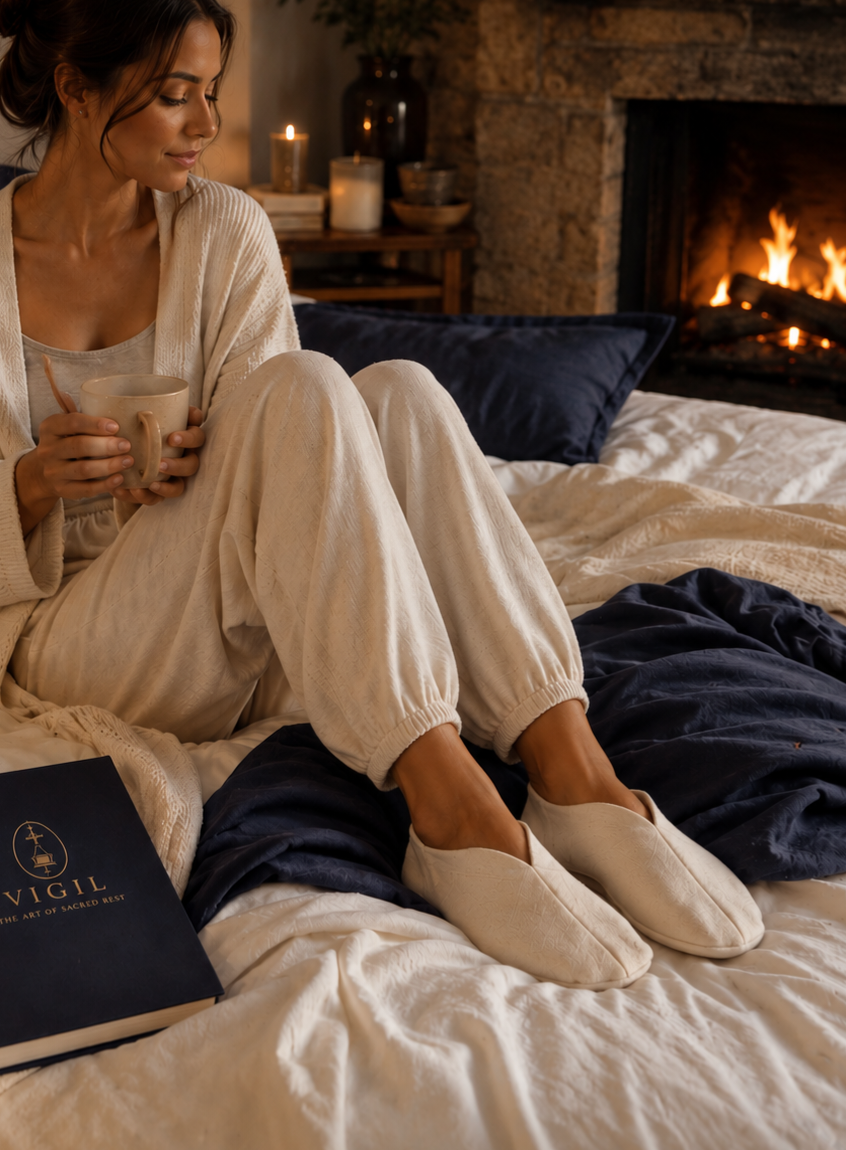
The world's first bedtime slipper made from pure linen, designed specifically to be worn while sleeping to keep feet comfortably warm without overheating.
We invest heavily in bedding and the perfect room temperature. Yet we overlook the one detail that dictates our sleep cycle: our feet. Double-layered with soft sole padding for the “up in the night” walks. Crafted from sustainably sourced flax, they make a dedicated microclimate for your feet.
A famous study published in Nature found that warm feet can shave an average of 15 minutes off the time it takes to fall asleep. By forcing vasodilation early, you effectively "trick" the brain into thinking it is time to sleep.
Deeper, More Stable Sleep: When your core temperature stays low and steady, you spend more time in REM and slow-wave (deep) sleep. People who wear bed socks report fewer instances of waking up in the middle of the night.
Prevents "Raynaud's" Disruptions: For people with poor circulation, cold feet can trigger mild vasospasms (where blood vessels clamp shut tightly). This causes pain, numbness, or tingling that physically wakes you up. Keeping them covered prevents this defensive panic response from your nervous system.
Prevents Hot Flashes: For those experiencing hormonal fluctuations (like menopause), the rapid core-cooling effect of warmed feet helps the brain's hypothalamus better regulate overall body temperature, mitigating dramatic nighttime hot flashes.
The "Linen Connection": This science is exactly why the fabric choice matters. If you wear cheap synthetic or tight socks, your feet get too hot, the vessels over-react, and you sweat, which ultimately freezes your feet and wakes you up.
Historically, pure flax linen was the absolute standard in hospitals (from the late 1800s up to the mid-20th century) for everything from bed sheets and patient gowns to surgical bandages. In fact, the medical industry used it so universally that we still call all bedding "linens" today, even if it's made of cotton or polyester.
Hospitals relied on pure linen for three critical, health-saving benefits:
1. Natural Infection Control (Antimicrobial)
Before modern synthetic antibiotics and chemical coatings, linen was a frontline defence against cross-contamination.
The Science: Flax fibres naturally contain phenolic acids, which are organic compounds that give the fabric natural antibacterial and bacteriostatic properties.
The Benefit: It actively inhibits the growth of bacteria, fungi, and dust mites. In crowded hospital wards (like historic tuberculosis units), linen helped suppress the spread of pathogens on surfaces.
2. Accelerated Wound Healing & Bed Sore Prevention
Linen was prized in surgical recovery and trauma wards because of how it interacts with human skin and moisture.
The Science: Linen is highly hygroscopic—it can absorb up to 20% of its weight in moisture before even feeling damp, and it evaporates that moisture incredibly fast.
The Benefit: It prevents the skin from becoming humid and macerated (pruned/weakened), which is the primary cause of friction tears, rashes, and severe bedsores (pressure ulcers) in immobile patients.Furthermore, historical medical studies show that natural linen fibres actually promote healthy cell proliferation, helping chronic wounds and burns heal faster without sticking to the skin.
Give it a go. It is a gift to help you sleep.
The world's first bedtime slipper made from pure linen, designed specifically to be worn while sleeping to keep feet comfortably warm without overheating.
We invest heavily in bedding and the perfect room temperature. Yet we overlook the one detail that dictates our sleep cycle: our feet. Double-layered with soft sole padding for the “up in the night” walks. Crafted from sustainably sourced flax, they make a dedicated microclimate for your feet.
A famous study published in Nature found that warm feet can shave an average of 15 minutes off the time it takes to fall asleep. By forcing vasodilation early, you effectively "trick" the brain into thinking it is time to sleep.
Deeper, More Stable Sleep: When your core temperature stays low and steady, you spend more time in REM and slow-wave (deep) sleep. People who wear bed socks report fewer instances of waking up in the middle of the night.
Prevents "Raynaud's" Disruptions: For people with poor circulation, cold feet can trigger mild vasospasms (where blood vessels clamp shut tightly). This causes pain, numbness, or tingling that physically wakes you up. Keeping them covered prevents this defensive panic response from your nervous system.
Prevents Hot Flashes: For those experiencing hormonal fluctuations (like menopause), the rapid core-cooling effect of warmed feet helps the brain's hypothalamus better regulate overall body temperature, mitigating dramatic nighttime hot flashes.
The "Linen Connection": This science is exactly why the fabric choice matters. If you wear cheap synthetic or tight socks, your feet get too hot, the vessels over-react, and you sweat, which ultimately freezes your feet and wakes you up.
Historically, pure flax linen was the absolute standard in hospitals (from the late 1800s up to the mid-20th century) for everything from bed sheets and patient gowns to surgical bandages. In fact, the medical industry used it so universally that we still call all bedding "linens" today, even if it's made of cotton or polyester.
Hospitals relied on pure linen for three critical, health-saving benefits:
1. Natural Infection Control (Antimicrobial)
Before modern synthetic antibiotics and chemical coatings, linen was a frontline defence against cross-contamination.
The Science: Flax fibres naturally contain phenolic acids, which are organic compounds that give the fabric natural antibacterial and bacteriostatic properties.
The Benefit: It actively inhibits the growth of bacteria, fungi, and dust mites. In crowded hospital wards (like historic tuberculosis units), linen helped suppress the spread of pathogens on surfaces.
2. Accelerated Wound Healing & Bed Sore Prevention
Linen was prized in surgical recovery and trauma wards because of how it interacts with human skin and moisture.
The Science: Linen is highly hygroscopic—it can absorb up to 20% of its weight in moisture before even feeling damp, and it evaporates that moisture incredibly fast.
The Benefit: It prevents the skin from becoming humid and macerated (pruned/weakened), which is the primary cause of friction tears, rashes, and severe bedsores (pressure ulcers) in immobile patients.Furthermore, historical medical studies show that natural linen fibres actually promote healthy cell proliferation, helping chronic wounds and burns heal faster without sticking to the skin.
Give it a go. It is a gift to help you sleep.